Choosing an appetizer supplier should involve more than comparing prices or browsing catalogues.
For restaurants, caterers, hotels and other foodservice professionals, the supplier becomes part of the experience ultimately delivered to the guest.
Product quality matters, but so do consistency, presentation, operational reliability and the ability to support your business as volumes change.
These factors become even more important when sourcing premium appetizers, handmade hors d’oeuvres, frozen cocktail bites or handcrafted canapés for receptions, banquets, events and upscale menus.
Here are the key criteria to consider before choosing a supplier.
1. Define Your Needs Before Comparing Suppliers
The best supplier is not necessarily the one with the largest catalogue. It is the one whose products and service model fit the way your operation works.
A restaurant, hotel, event caterer and foodservice distributor may all purchase appetizers, but their requirements can be very different.
What Types of Products Do You Need?
- frozen appetizers;
- premium hors d’oeuvres;
- handmade canapés;
- cocktail bites;
- mini desserts;
- ready-to-fill products;
- or a combination of several categories.
A supplier specializing in premium cocktail appetizers may offer a very different level of product expertise from a broad-line general foodservice distributor.
How Much Preparation Do You Want to Keep In-House?
Some foodservice operations prefer products that require minimal preparation. Others want to retain control over filling, finishing, garnishing or plating. The right supplier should fit into your kitchen workflow rather than force your team into a preparation model that does not suit your operation.
What Volumes Do You Need to Manage?
Consistency becomes increasingly important as volume grows. A product that performs well for a small reception also needs to remain reliable when ordered in larger quantities for a banquet, wedding, corporate event or high-volume service.
2. Evaluate Product Quality, Taste and Consistency
For a premium foodservice operation, quality cannot remain a marketing claim. It has to be noticeable in the finished product.
Taste Comes First
An attractive product cannot compensate for disappointing flavour or texture. When evaluating a premium appetizer supplier, consider:
- flavour quality;
- balance of the recipe;
- texture;
- pastry or base quality;
- filling;
- and the final result after preparation.
The product should also match the experience your business intends to deliver. An upscale hotel reception, catered event or premium banquet will generally have different expectations from a high-volume, value-oriented foodservice offer.
Consistency Matters as Much as the First Sample
A successful tasting is only the beginning. For a professional buyer, quality also means receiving a dependable product from case to case, from order to order and as purchasing volumes increase. Size, shape, filling and finishing should remain sufficiently consistent to support a controlled presentation.
Presentation Should Match Your Positioning
In the premium appetizer category, visual presentation is part of the guest experience. A product that looks overly industrial, inconsistent or difficult to plate can weaken the overall impression of a carefully designed menu.
3. Look at Craftsmanship and Production Methods
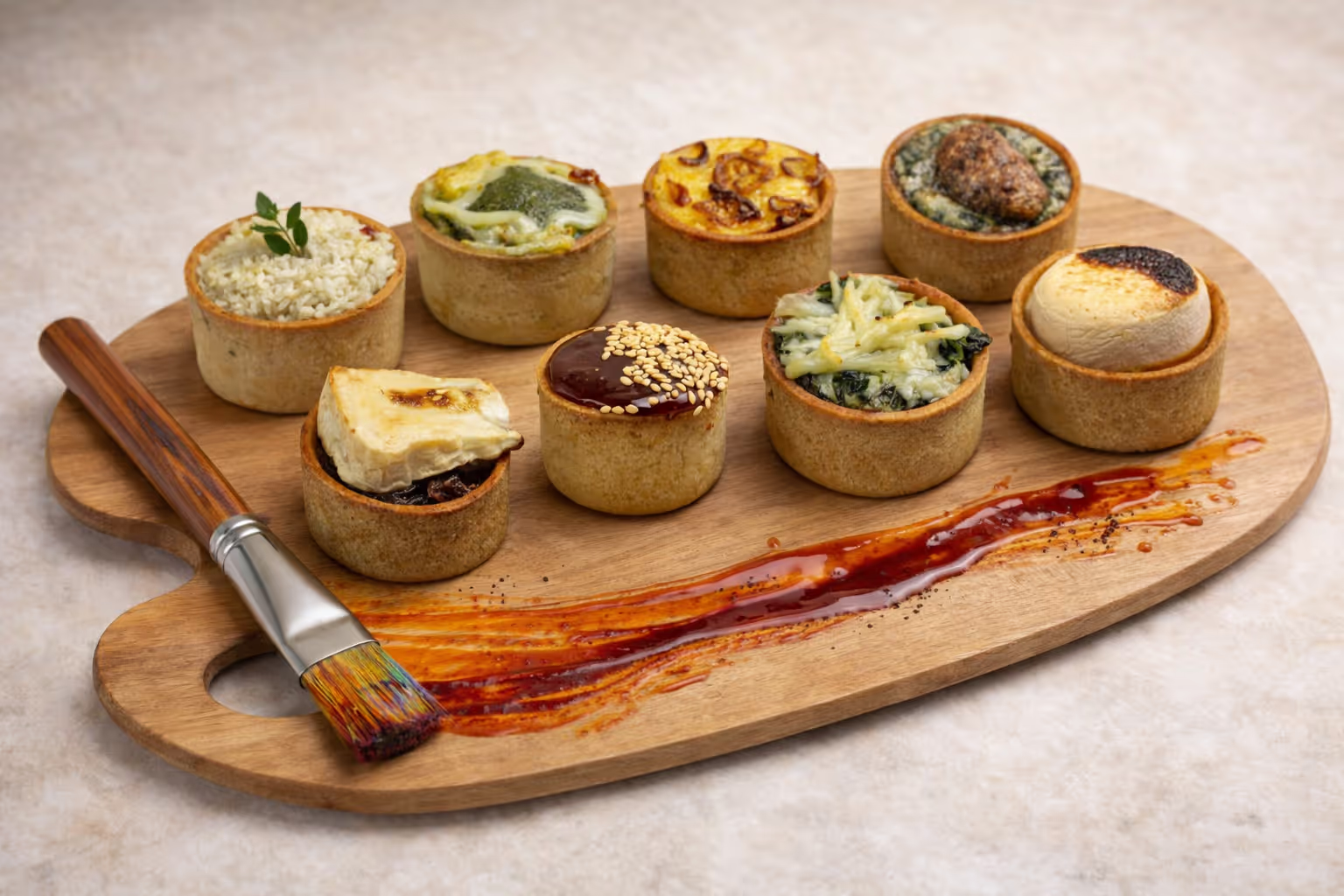
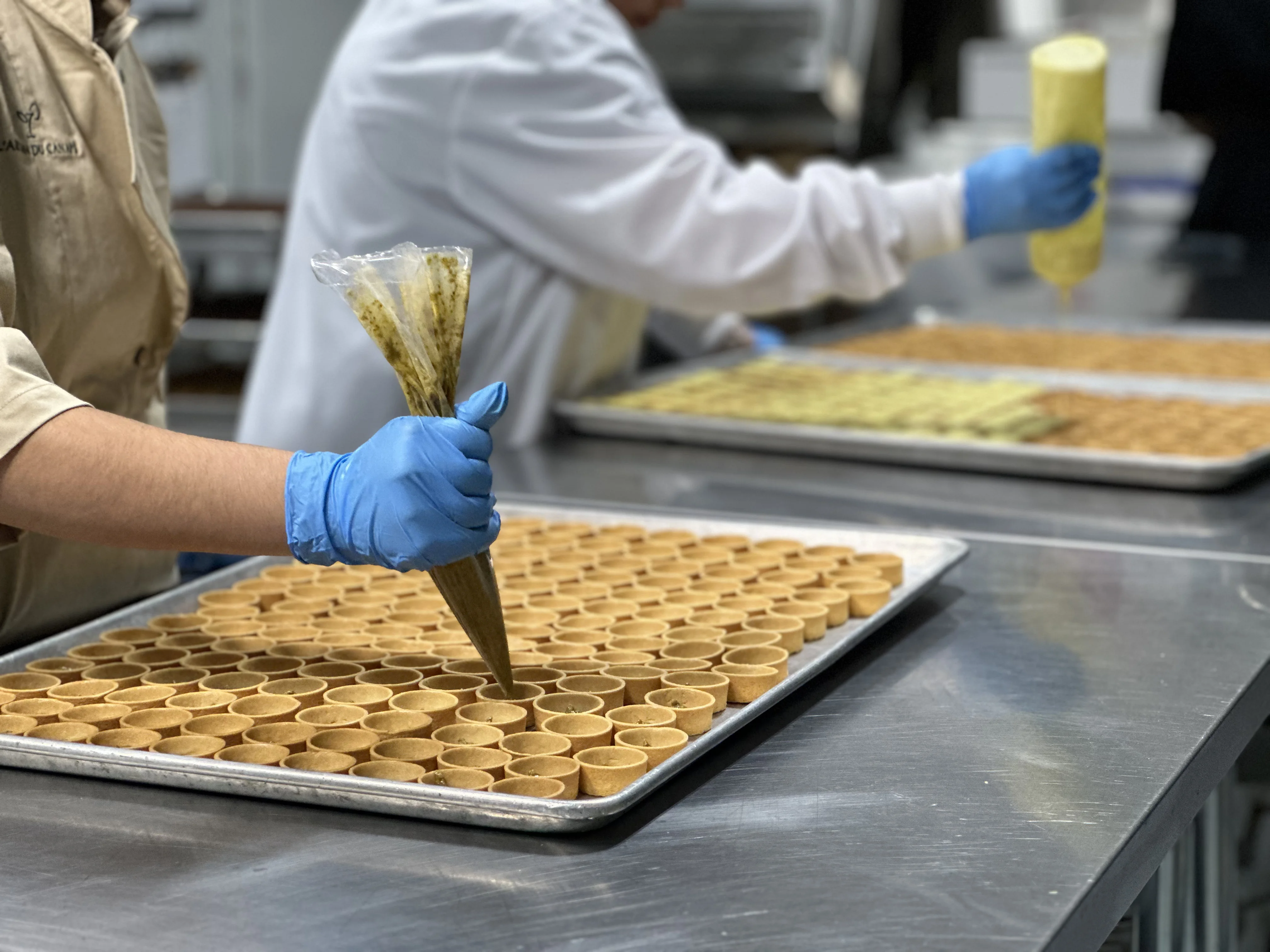
The production method can become a meaningful differentiator when sourcing high-end products. Handmade hors d’oeuvres and hand-assembled canapés can allow greater attention to finishing, presentation and individual product character.
But there is an important distinction: handmade does not automatically mean better. Craftsmanship only matters when it creates a genuine benefit in the finished product.
What Can Handmade Production Add?
- more detailed finishing;
- greater recipe variety;
- a less standardized appearance;
- careful assembly;
- and more flexibility in customization.
For premium hospitality and catering, these elements can add value when they are visible or noticeable to the guest.
Consider Customization Capabilities
A strong hors d’oeuvres supplier may also be able to offer more than a fixed list of standard products. Depending on your requirements, it may be useful to ask about specific formats, custom assortments, recipe adjustments, presentation options, case formats or products developed for particular foodservice applications.
4. Check the Supplier’s Operational Reliability
An excellent product is of little value if it is not available when your kitchen needs it. Supplier quality should therefore also be assessed operationally.
Availability and Volume Capacity
Before adding a product to your regular menu or assortment, confirm whether the supplier can support your usual purchasing volumes as well as occasional larger orders.
Storage and Logistics
For frozen appetizers and frozen cocktail bites, make sure you understand:
- storage requirements;
- delivery conditions;
- packaging;
- case quantities;
- freezer space requirements;
- and preparation instructions.
Shelf-stable or ready-to-fill products may involve a very different logistics model. The best format depends on your own kitchen, storage capacity and service requirements.
Lead Times and Communication
A B2B supplier relationship is not only about food. It is also about response times, clarity of information, order management, the ability to handle unexpected needs and access to someone who can answer product or service questions.
5. Test the Products Before Choosing a Supplier
Before committing to a significant order, a tasting or real-world product test is one of the most useful ways to evaluate a supplier.
What Should You Evaluate During a Tasting?
- flavour;
- texture;
- appearance;
- portion size;
- consistency;
- ease of preparation;
- behaviour after baking, heating or thawing when applicable;
- and the final plated presentation.
If you operate in catering or event service, consider how the product behaves after preparation rather than only at the exact moment it leaves the kitchen.
Test According to Your Own Guests and Service Style
A corporate cocktail reception, hotel banquet and private wedding do not necessarily require the same product characteristics. Your evaluation should therefore consider service style, level of positioning, time between preparation and consumption, expected volumes and final presentation.
L’Artisan du Canapé: Premium Products with a Handmade Approach
L’Artisan du Canapé offers foodservice professionals a selection of premium appetizers, hors d’oeuvres and small-format bites, with a strong emphasis on craftsmanship and careful finishing.
The range includes handmade hors d’oeuvres, frozen appetizers and ready-to-fill products developed for restaurants, caterers, hotels, distributors and other professional foodservice operations.
6. Frequently Asked Questions
How do I choose an appetizer supplier?
Start by defining your product, volume, storage and preparation requirements. Then compare suppliers based on product quality, consistency, production methods, operational reliability and their ability to support your foodservice needs.
Should I choose a manufacturer or a foodservice distributor?
It depends on your priorities. A manufacturer may provide deeper product knowledge and sometimes more customization opportunities. A distributor may offer a broader range from multiple manufacturers.
What should I check when buying frozen appetizers?
Evaluate taste, texture after preparation, storage requirements, case format, heating or thawing instructions, portion consistency and the supplier’s ability to maintain reliable product availability.
Why should I request a tasting before placing a bulk order?
A tasting allows you to evaluate flavour, presentation, texture, portion size and ease of preparation under conditions that resemble your real service environment before committing to larger volumes.
Where can I find a premium hors d’oeuvres supplier in Montreal?
L’Artisan du Canapé offers foodservice professionals a selection of premium appetizers and hors d’oeuvres, including handmade products, frozen bites and ready-to-fill solutions. Professional buyers can explore the catalogue or request a tasting based on their operational needs.