
What Are Shelf-Stable Ready-to-Fill Pastry Shells?
Ready-to-fill pastry shells are prepared pastry bases designed for professional kitchens that want to spend less time producing individual shells and more time focusing on fillings, finishing and presentation.
When they are also shelf-stable, they can be stored according to the product’s specified non-frozen storage conditions until they are needed.
For restaurants, caterers, hotels and other foodservice professionals, this format can offer a valuable balance between operational efficiency, consistent presentation and culinary creativity.
For a premium foodservice operation, however, efficiency should never mean lowering standards. The objective is not simply to serve faster. It is to decide which elements should be prepared in-house, which can be sourced from a trusted specialist, and where the culinary team can create the greatest value.
What Does “Ready-to-Fill” Mean?
A ready-to-fill pastry shell is a prepared pastry base that removes many of the repetitive steps involved in producing small tartlets or canapé shells from scratch.
Depending on the recipe, in-house pastry production can involve:
- preparing the dough;
- resting and rolling it;
- portioning;
- shaping;
- baking;
- cooling;
- and preparing each shell for filling.
With a ready-to-fill format, the kitchen can move more quickly to the creative stages: filling, garnishing and finishing.
This does not mean replacing the chef’s work.
It means shifting that work toward the parts of the final creation that guests actually experience most directly: flavour, texture, balance and presentation.
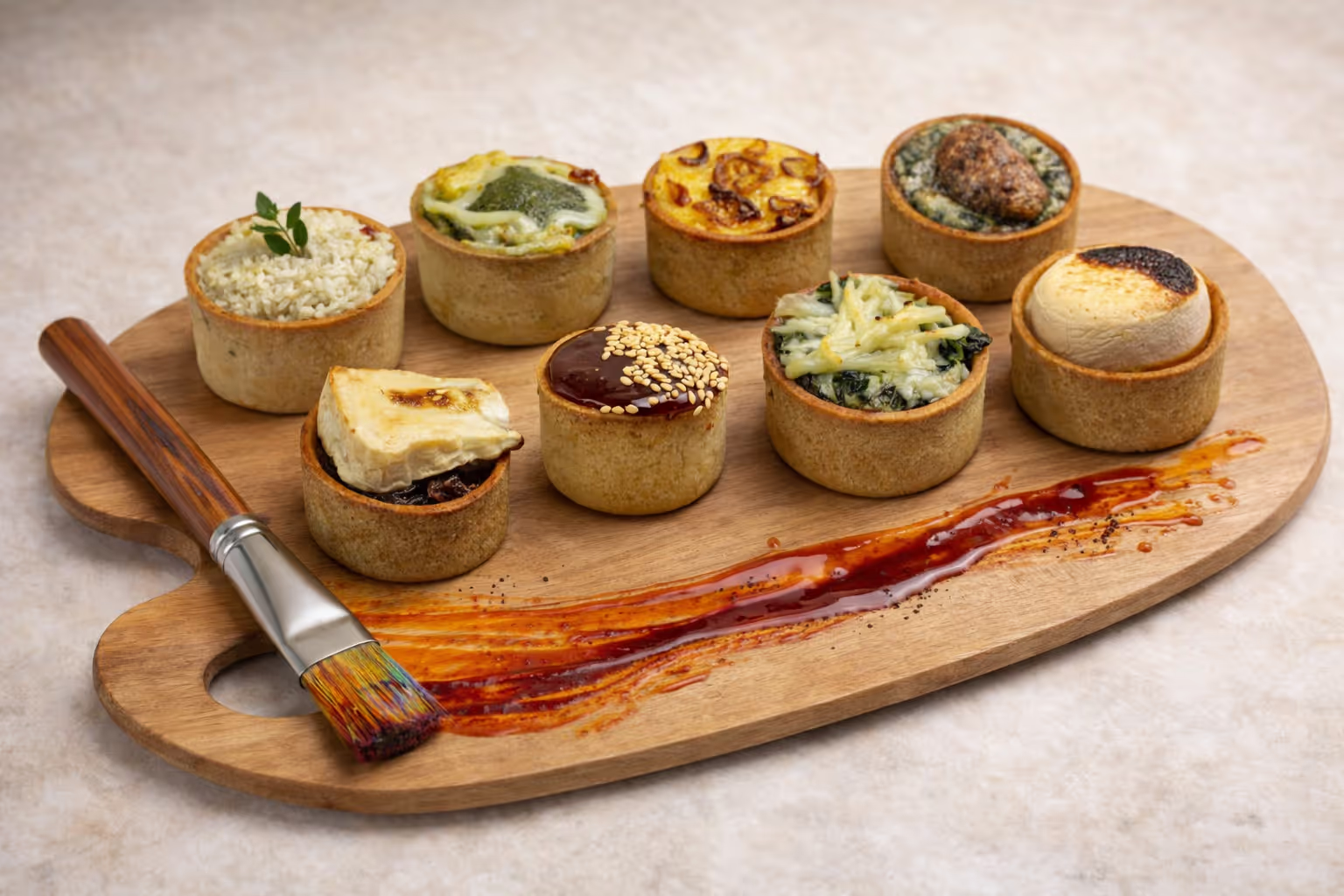
A well-chosen pastry base can therefore function as a consistent canvas for a much more distinctive culinary expression.
What Does “Shelf-Stable” Mean?
In foodservice, shelf-stable generally refers to a product designed to remain stable without frozen storage when kept under the conditions specified by its manufacturer.
For professional kitchens, this can make inventory and storage easier to manage, particularly when freezer capacity is limited or when products need to remain easily accessible during service.
However, shelf-stable does not mean unlimited shelf life.
Storage temperature, best-before dates and handling requirements depend on the specific product.
Foodservice buyers should always consult the product specifications rather than assuming that every shelf-stable pastry shell has the same storage conditions.
Shelf-Stable vs Frozen Pastry Shells
The most immediate difference is storage.
Frozen products normally require freezer capacity and a defined thawing or preparation process. Shelf-stable products are designed to be stored under their specified non-frozen conditions.
But the right choice depends on more than storage alone.
Professional kitchens should also consider:
- preparation time;
- service volume;
- available storage;
- texture;
- presentation;
- product consistency;
- and how the shell fits into the kitchen workflow.
Neither format is automatically superior.
The best choice is the one that supports the operation without compromising the culinary result.
For a more detailed comparison, see our guide to shelf-stable vs frozen pastry shells.
Sweet, Savoury and Neutral Pastry Shells
Ready-to-fill pastry shells can serve very different culinary applications depending on their flavour profile.
L’Artisan du Canapé offers sweet, savoury and neutral mini pastry shell formats, giving professional kitchens flexibility across appetizers, hors d’oeuvres, receptions and dessert applications.
Sweet Pastry Shells
Sweet shells are naturally suited to mini desserts and petits fours.
Depending on the recipe, they can be paired with ingredients such as:
- creams;
- chocolate;
- fruit;
- ganache;
- mousse;
- or other dessert fillings.
Their small format can make them particularly useful for receptions, buffets and premium dessert assortments.
Savoury Pastry Shells
Savoury shells are designed for cocktail bites, hors d’oeuvres and other small-format creations.
The chef retains control over the filling, seasoning and finishing, allowing the final product to reflect the menu or event rather than looking like a standardised ready-made appetizer.
Neutral Pastry Shells
Neutral shells provide greater versatility.
Because the pastry itself does not strongly dictate a sweet or savoury direction, chefs can use them as a flexible base for different culinary ideas, depending on the specific shell and filling.
Why Professional Kitchens Use Ready-to-Fill Pastry Shells
The value of a ready-to-fill product is not simply that it is “convenient.”
For a professional kitchen, the real question is whether it helps improve workflow while maintaining the level of quality expected by guests.
More Efficient Preparation
Producing dozens or hundreds of identical pastry shells requires repetitive work.
Ready-to-fill shells can reduce those steps and allow teams to focus on:
- fillings;
- garnishes;
- sauces;
- plating;
- and final presentation.
This can be particularly relevant for catering, banquets, receptions and other high-volume environments.
Greater Consistency
Premium presentation depends on precision.
When multiple pieces are served together on a tray or buffet, variations in size or shape become highly visible.
Using consistent pastry shells can help culinary teams achieve a more polished and coherent presentation while maintaining creative control over the final composition.
More Room for Culinary Creativity
Using a prepared shell does not mean serving a generic product.
A neutral or carefully selected base can support a wide range of fillings, ingredients and finishing styles.
The same shell format may be interpreted very differently depending on:
- the filling;
- the garnish;
- the texture combination;
- the seasoning;
- and the chef’s presentation.
This is where efficiency and creativity can work together rather than compete.
Ready-to-Fill and Handmade: Are They Opposites?
Not necessarily.
The assumption that everything in a premium kitchen must be made completely from scratch is too simplistic.
Handmade foodservice is ultimately about craft, attention to detail and the quality of the finished experience.
A chef may choose to prepare a signature filling by hand, finish every canapé individually and maintain precise presentation standards while using a professionally produced pastry base.
The more relevant question is:
Which elements genuinely benefit from being made in-house?
If producing hundreds of identical pastry shells consumes significant labour without adding meaningful differentiation for the guest, sourcing a high-quality ready-to-fill base can allow the culinary team to concentrate on the areas where its craftsmanship matters most.
For premium operators, sourcing therefore becomes part of culinary judgement.
It is not simply a shortcut.
Who Uses Ready-to-Fill Pastry Shells?
Ready-to-fill pastry shells are relevant across many professional foodservice environments, including:
- restaurants;
- caterers;
- hotels;
- banquet operations;
- golf clubs and private venues;
- casinos;
- and foodservice distributors.
Each operation may use the product differently.
A restaurant may need a reliable base for recurring menu preparations, while a caterer may value flexibility across changing guest counts and event concepts.
Hotels and banquet operations may focus more heavily on consistency when producing large volumes for receptions, weddings or corporate functions.
The common objective is not simply speed.
It is controlled execution at professional scale.
What Should Buyers Look for When Choosing Pastry Shells?
A premium product should be evaluated on more than appearance alone.
Professional buyers should consider four main factors.
Format and Application
The size, shape and flavour profile of the shell should match the intended use.
A small cocktail bite may have very different requirements from a dessert tartlet or buffet application.
Texture and Presentation
The pastry should provide the texture and visual finish expected from the final creation.
Testing the product with the actual fillings used in the kitchen is often more informative than evaluating the shell on its own.
Storage and Packaging
Buyers should confirm:
- required storage conditions;
- shelf life;
- handling instructions;
- packaging format;
- and case quantities.
These details can have a significant impact on purchasing and kitchen organisation.
Consistency
For professional foodservice, consistency in size, structure and presentation becomes increasingly important as volume grows.
A reliable shell helps chefs reproduce the same quality of presentation across multiple services or events.
Premium Ready-to-Fill Products from L’Artisan du Canapé
L’Artisan du Canapé develops premium foodservice products for professionals who value quality, presentation and consistency.
Its range includes shelf-stable ready-to-fill mini pastry shells in sweet, savoury and neutral formats, alongside its broader selection of premium and handmade hors d’oeuvres and appetizers.
The objective is not to replace the culinary identity of the chef.
It is to provide a reliable foundation on which restaurants, caterers, hotels and other foodservice professionals can build their own creations.
Explore our ready-to-fill pastry shell selection in the L’Artisan du Canapé catalogue.
Would you like to evaluate the products in your own professional environment?
Request a free tasting and speak with our team about your foodservice needs.
Frequently Asked Questions
Are ready-to-fill pastry shells already baked?
Many ready-to-fill pastry shells are supplied prepared or pre-baked so that professional kitchens can move directly to the filling and finishing stage. Preparation requirements vary by product, so the instructions for each shell should always be followed.
What does shelf-stable mean for pastry shells?
Shelf-stable generally means that a product is designed to be stored without freezing under the conditions specified by its manufacturer. It does not mean unlimited shelf life, and storage requirements may vary between products.
Do ready-to-fill pastry shells need to be frozen?
Not always. Some are shelf-stable, while others may require frozen or different storage conditions. Buyers should always check the specifications for the individual product.
Can ready-to-fill pastry shells be used for sweet and savoury recipes?
Yes, depending on the shell. Sweet, savoury and neutral formats are available, allowing professional kitchens to select the base that best matches the intended filling.
Are ready-to-fill pastry shells suitable for premium foodservice?
Yes, provided the shell meets the operation’s standards for texture, presentation, consistency and flavour. In premium foodservice, the key is to evaluate the entire finished creation rather than judging quality solely by whether every component was produced from scratch.
